

Day one: a buyer signs for their keys at the sales gallery, already imagining life in their new unit. This is exactly where the conversation about a VP management system Malaysia developers use should actually begin, not months later once the paperwork trail has already gone cold.
Fast forward to day fourteen, and that same buyer calls to ask why a plumbing defect they reported has still not been fixed, because nobody in the office can locate the original report. Somewhere in those months, the thread got lost, not because anyone stopped caring, but because VP handover and defect tracking were treated as two separate jobs instead of one continuous system.
The Journey Starts Before the First Defect Is Ever Reported
Long before anyone logs a defect, there’s VP handover, the moment a buyer receives vacant possession of their unit. This stage alone involves scheduling, key collection, unit inspection, and documentation, all of which need to be coordinated across sales, project, and customer care teams.
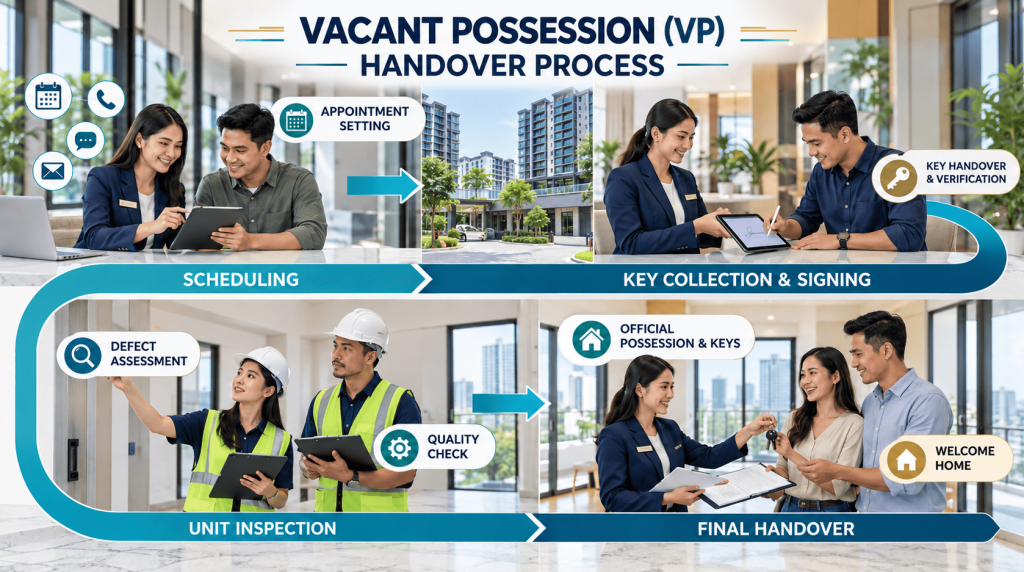
When this early stage is disorganized, handled through scattered phone calls and paper checklists, the disorganization simply carries forward into everything that follows. A rushed, poorly documented key collection often means the defect list that follows is incomplete, inconsistent, or missing photos and details that would have made rectification faster later on.
This is why VP & defect management should really be understood as one continuous system, not two separate problems. The quality of the handover directly shapes how manageable the defect phase becomes.
Defect Reporting Is Just the Middle Chapter
Once the keys are in hand, homeowners start noticing things, a misaligned door, a leaking tap, hairline cracks in the plaster. This is the part most developers already have some process for, even if that process is a WhatsApp group and a shared spreadsheet. But logging a defect is only useful if what happens next is equally structured: assigning it to the right contractor, tracking whether it’s been addressed, verifying the work before marking it complete, and keeping the homeowner informed the entire time.
Developers who stop investing at the “logging” stage often find that defects pile up in a kind of limbo, reported, technically assigned, but with no clear record of progress. That’s not a defect tracking problem anymore. It’s a VP & defect management problem, one that spans far beyond a single reported issue.
The Part Almost Everyone Underestimates: DLP
Here’s where things get genuinely risky for developers who haven’t thought this through. According to PEPS Ventures, the Defect Liability Period, or DLP, is a legally defined window during which the developer remains responsible for rectifying defects the homeowner reports. It doesn’t end when the first wave of obvious defects gets fixed. It continues for the full duration set out in the contractual agreement, and every single claim made during that window needs to be tracked, timestamped, and resolved, or documented with a clear reason if it isn’t.
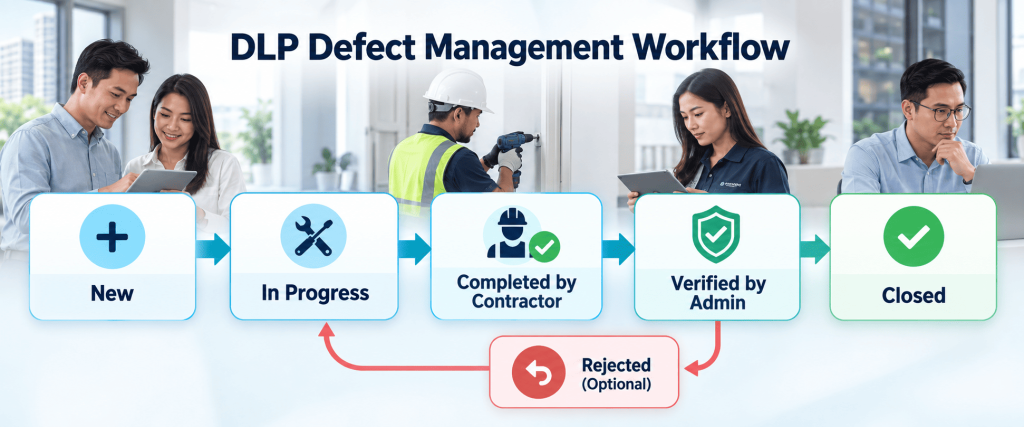
A weak DLP defect management system tends to fail quietly. Nobody notices the gaps until a homeowner produces a defect report from eight months ago that nobody in the office has any record of. At that point, it’s not just an operational embarrassment, it’s a genuine legal and reputational exposure. Managing DLP properly means the developer can always answer, with confidence and documentation, exactly what was reported, when, and what happened next.
What “Managing the Entire Lifecycle” Actually Looks Like
Put together, the full defect resolution lifecycle looks something like this:
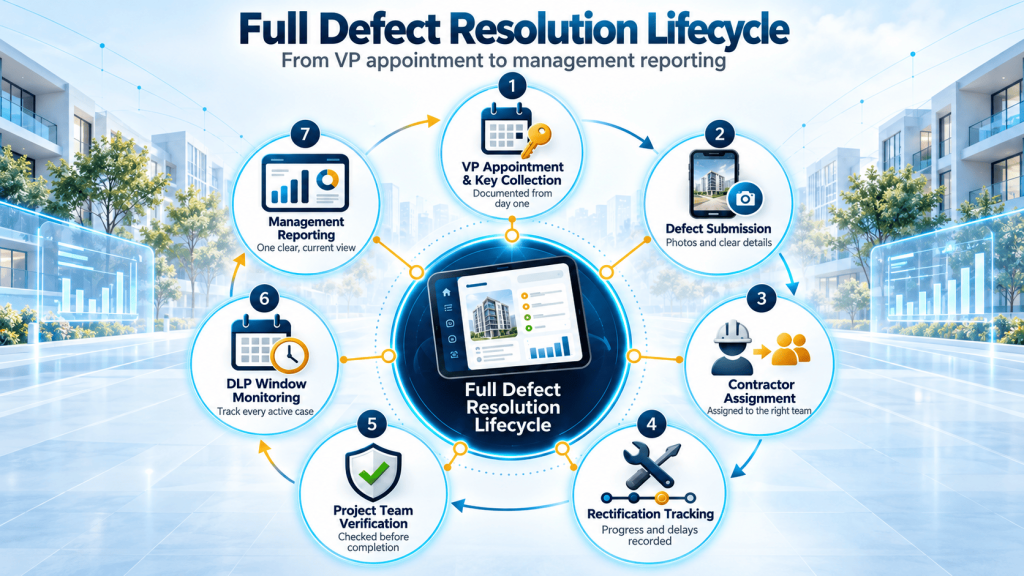
- VP appointment scheduling and key collection, documented from day one
- Defect submission, ideally with photos and clear descriptions captured at the point of reporting
- Assignment to the correct contractor or subcontractor
- Rectification tracking, including reasons for any delay
- Verification by the project team before anything is marked complete
- Ongoing tracking against the DLP window, for as long as that period remains active
- Reporting that gives management a clear, current view across every stage above
Each of these stages depends on the one before it. A gap anywhere in that chain doesn’t just cause a local problem, it creates uncertainty that ripples all the way through to the homeowner’s experience and the developer’s legal position. This is precisely why a genuine DLP defect management system needs to sit across the whole list above, not just the rectification steps in the middle.
Why Most Developers Only Solve Half the Problem
It’s genuinely common for developers to build a decent process around defect logging and rectification, and then leave VP handover and DLP tracking as an afterthought, handled with whatever tools happen to be lying around. The result is a system that looks complete from the outside but has real gaps at both ends, at the beginning, where handover documentation is thin, and at the end, where DLP claims quietly fall out of view once the initial rush of defects has been dealt with.
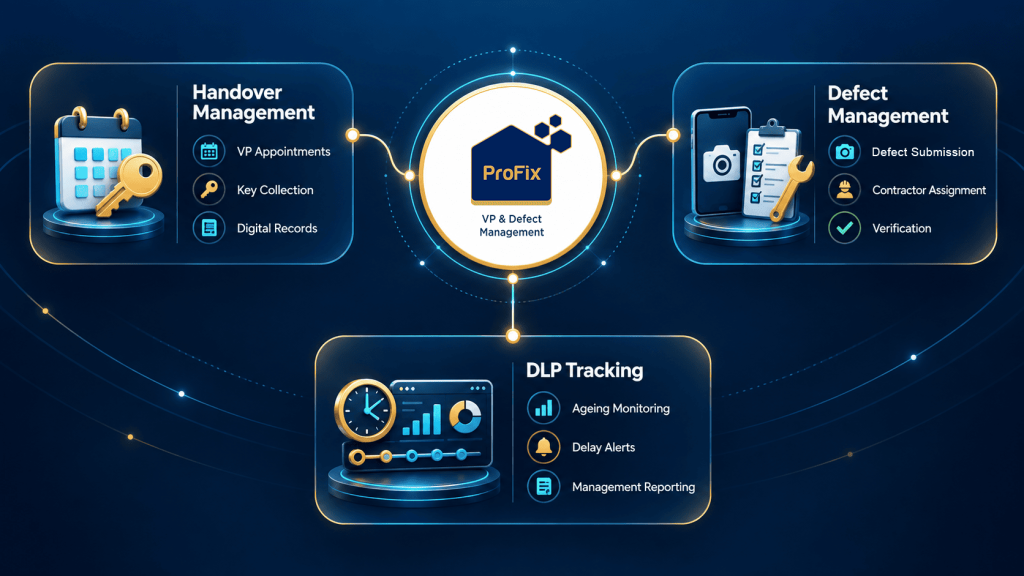
A genuine VP & defect management like ProFix, treats all of this as one connected record. The same platform that scheduled the key collection should be the one tracking whether a defect reported eleven months into the DLP window has actually been resolved, because both pieces of information belong to the same unit, the same buyer, and the same developer’s obligations.
Closing the Loop for Good
This is exactly the gap platforms like ProFix were built to close, connecting VP handover, defect submission, rectification, verification, and the full DLP tracking window into a single, continuously updated record rather than a patchwork of forms, spreadsheets, and group chats.
When every stage of the journey lives in one place, developers stop discovering problems after the fact and start managing the entire process with the same visibility from the first key collection to the final DLP closure, which is really what a complete VP management system Malaysia developers can rely on should deliver in the first place.
See how ProFix manages the full VP handover, defect, and DLP lifecycle in one connected platform. Book a free demo today.