

You hand over the keys. The buyer smiles, takes a few photos, and walks into their new unit for the first time. For a lot of developers, that’s where the mental checklist stops. But that moment is actually where VP & defect management starts, not where it ends. Good VP & defect management is really what you do in the weeks and months after handover, and it decides whether this buyer becomes your best referral or your worst review.
Here are four straight answers to what actually happens after the keys, and how ProFix keeps each part under control.
1. What happens to the handover itself?
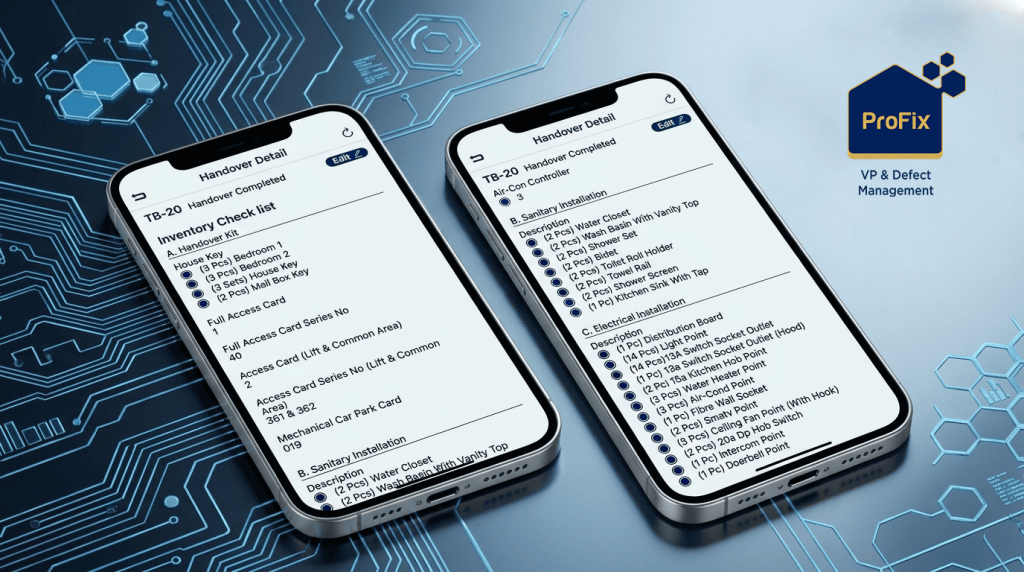
It gets documented, properly, the first time. Before your buyer ever walks in, ProFix has already sent them a clearance notice once their payments are cleared, let them log in, and let them book their own handover appointment, with a reminder sent a few days ahead. On the actual day, you’re not just handing over keys. You’re walking through an inventory checklist together, recording water and electrical meter readings, and getting it all signed off inside the app before they leave.
This matters because this is the one moment everything after it depends on. If your starting point is fuzzy, every defect conversation that follows starts on shaky ground too.
2. What happens when your buyer finds a defect?
They submit it straight through the app: a photo, a quick note, and a priority level. No more digging through a WhatsApp group three weeks later trying to find the picture someone sent. From there, the clock starts, not whenever someone happens to notice it.
You can choose how hands-on you want to be. Your defect team can verify every submission before it goes to a contractor, or you can let the system auto-assign it straight away. Either way, the process doesn’t slow down just because a lot of defects come in at once. ProFix is built to handle up to 100 submissions in 24 hours, all inside a 30-day cooling-off period, so a busy week doesn’t turn into a backlog nobody can see. ent little to act on.
3. What happens when a defect actually gets fixed?
This is usually where manual processes quietly fall apart, because “fixed” and “properly closed” are two different things. ProFix treats closure as part of the same automated flow. Once your contractor finishes the work and uploads proof, your defect team verifies it, and depending on how you’ve set things up, a joint inspection with the owner confirms it’s done before it’s signed off.
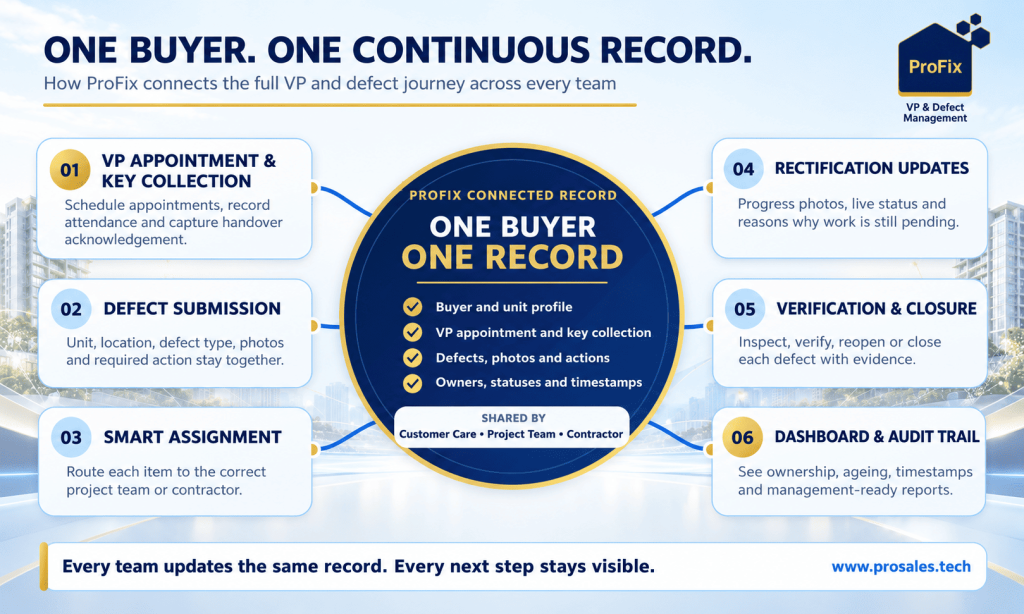
If your buyer doesn’t respond, a reminder email goes out automatically. They can still reopen it if something’s genuinely wrong, so nobody feels rushed into accepting a bad fix, but the case also can’t sit open forever just because nobody circled back.
This is VP & defect management doing exactly what it should: giving buyers a fair chance to push back, without letting a case drift unresolved. This same discipline is exactly what a proper DLP defect management system needs, because as iProperty’s guide to defect liability in Malaysia explains, every defect reported within the statutory 24-month window carries a strict 30-day response obligation, which means every claim deserves the same clear, timestamped resolution, not something that quietly falls out of view.
4. What happens to your visibility as the developer?
You stop having to ask for updates. A real-time dashboard, on web and app, shows you total defects, what category and location they’re coming from, what’s still outstanding, and your appointment status, all without someone compiling it for you. Alongside that, a single report tracks defect status by batch, plus key movement and aging, because tracking which keys came back from which owner is its own quiet risk if nobody’s watching it.
You get one place to look, instead of five people to ask.

The Real Answer
Handing over keys is the easy part. What happens after is where your brand’s reputation actually gets decided, one defect, one update, one closed case at a time. A genuine VP management system Malaysia developers can rely on isn’t a separate app bolted onto your sales process. It’s the thread that connects handover, key collection, defect resolution, and DLP tracking into one continuous record, so nothing about your buyer’s experience is left to whoever happens to remember to follow up.
See how ProFix keeps VP handover, key collection, defect management, and DLP tracking connected in one system from the moment a unit clears for handover. Book a free demo today.